







Victron Venus OS v3.80
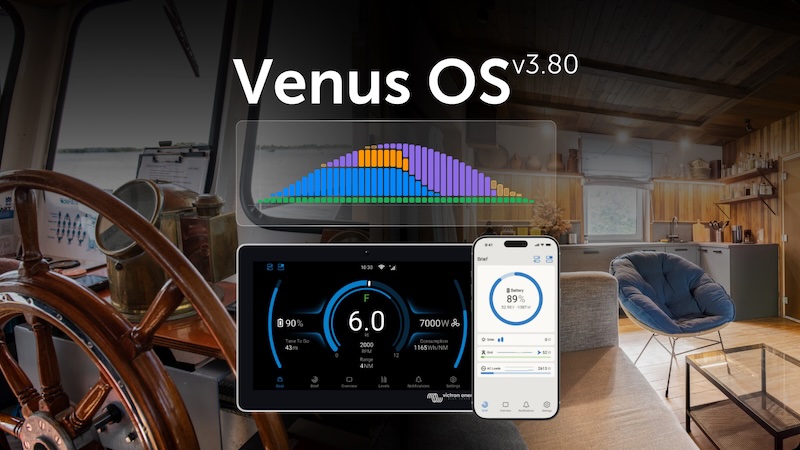
- Excess loads
- EEBus integration
- GX UI portrait mode
- GX control panel improvements
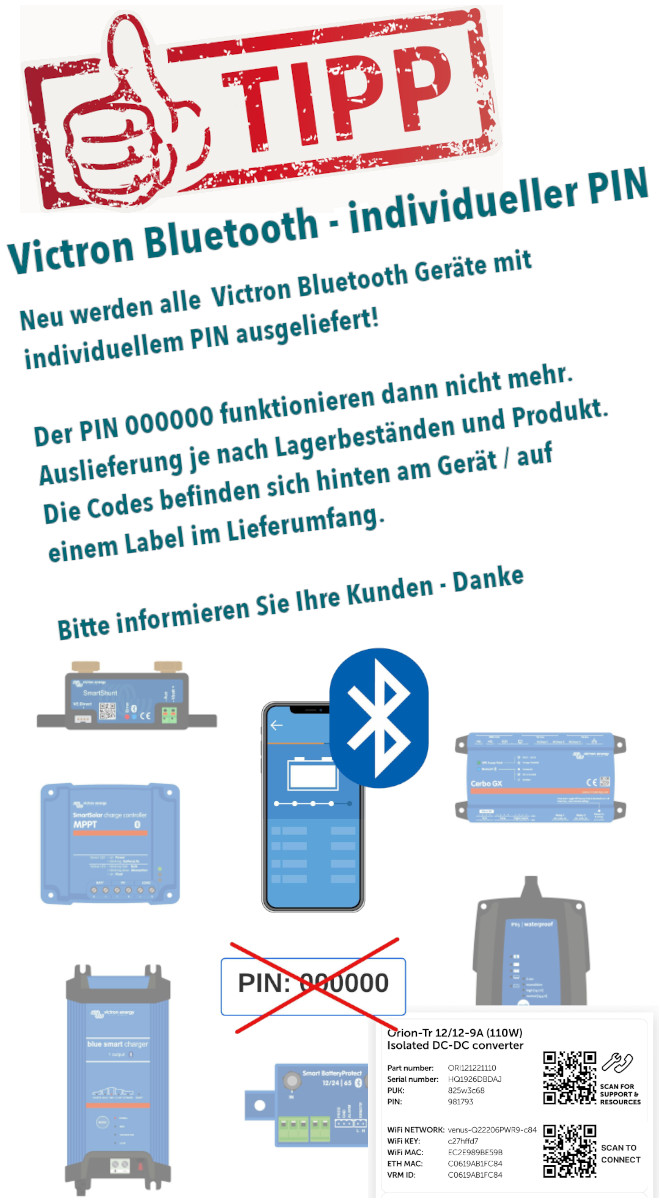
- Bluetooth range extender
- GX Bluetooth BMS readout
- EV charging station improvements

Featured products
VRG - Lithium, 16'001 - 19'000 gr.
86021
Advance recycling fee for lithium batteries
16'001 - 19'000 gr.
Anyone selling batteries in Switzerland is obliged
to charge an early disposal fee!
VRG - Advance recycling fee
Lithium-ion batteries
Lithium-ion batteries are very efficient and long-lasting energy storage devices that can be recharged countless times if used correctly. However, they harbour a certain risk potential: they can catch fire if overcharged, deeply discharged or damaged. The appliance manufacturers and retailers will tell you what you need to bear in mind when using the batteries.
At the end of their service life, rechargeable batteries must be disposed of properly in order to recover the recyclable materials. On the other hand, to prevent hazards during disposal.
Where to dispose?
Under no circumstances should Li-ion batteries or devices with permanently installed batteries be disposed of in rubbish: the waste compactors in the rubbish lorry can damage the batteries and cause them to catch fire.
Undamaged small batteries can be disposed of at a normal battery collection point
E-bike batteries: Return to e-bike dealer or municipal collection point
Do not remove permanently installed batteries (mobile phones, cordless drills, electric toothbrushes), return entire devices to the dealer or dispose of them at the municipal electronics collection point.
How to dispose of them?
Cover exposed terminals with adhesive tape
Pack damaged or deflated batteries in a separate plastic bag and hand them in at an authorised collection point (local authority or retailer)
Fully discharge LiPo batteries with the corresponding charger, if the charger offers the option.
How do I recognise Li-ion batteries?
Lithium-ion batteries can be recognised by the printed symbol: Li. The so-called LiPo batteries are a subgroup of lithium-ion batteries with a polymer-like electrolyte instead of a liquid one. They often have a flat design and are only wrapped in a plastic film.
Lithium-ion batteries should not be confused with lithium-metal batteries, which look like normal batteries but can release more energy. They are often used in cameras and flash units. Caution: Lithium metal batteries must never be recharged.
Common rechargeable batteries are not lithium-ion batteries, but nickel-metal hydride batteries (NiMh).
They do not pose a fire hazard.
86021
Data sheet
- Manufacturer data sheet & operating instructions
- https://www.inobat.ch/de/Batterierecycling/RechtlicheGrundlagen.php
Customers who bought this product also bought:
-

- New
Advance recycling fee for lithium batteries
16'001 - 19'000 gr.
Anyone selling batteries in Switzerland is obliged
to charge an early disposal fee!