




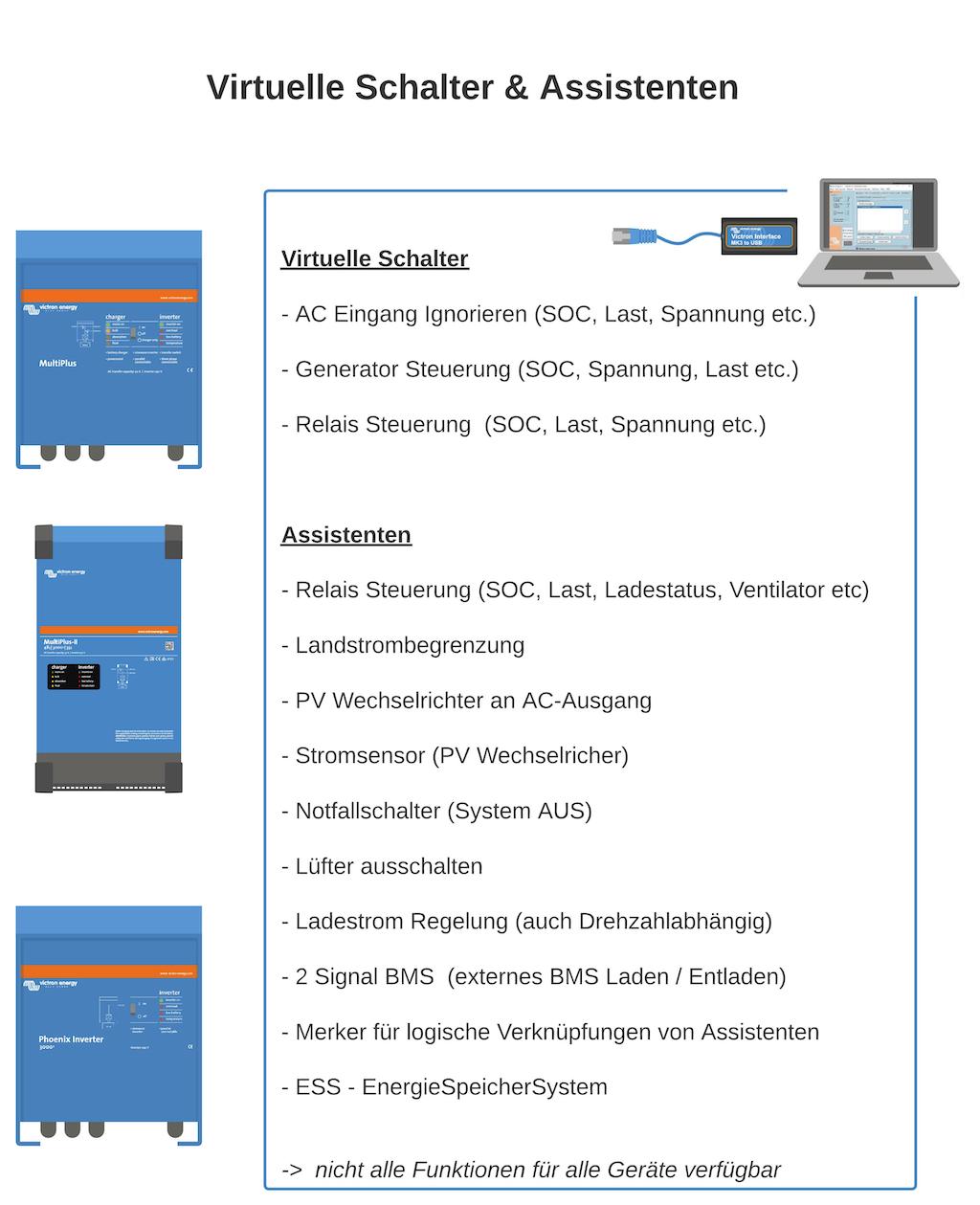
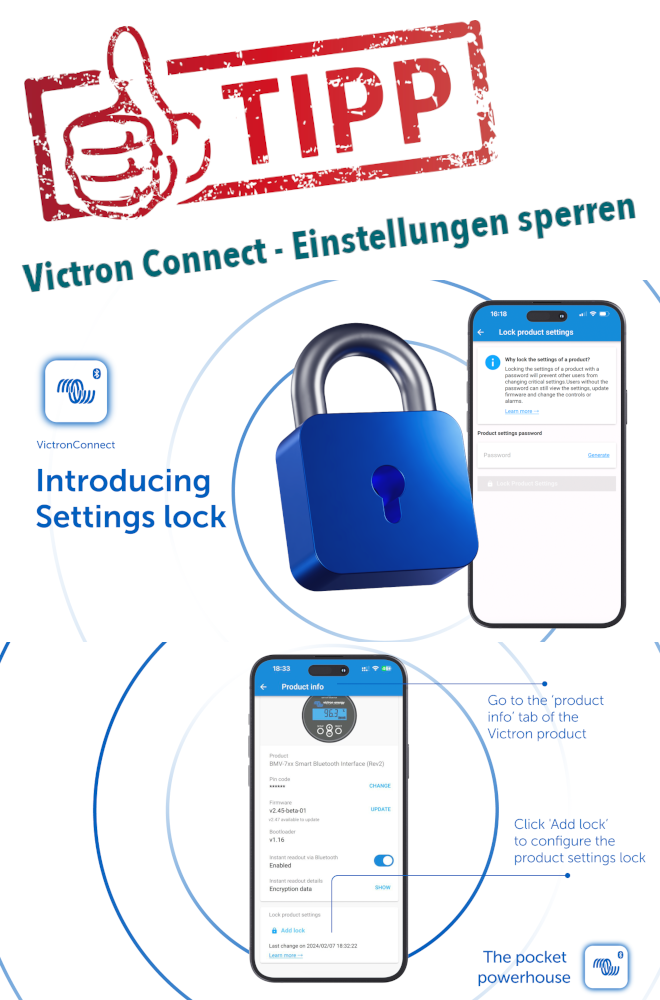
- New
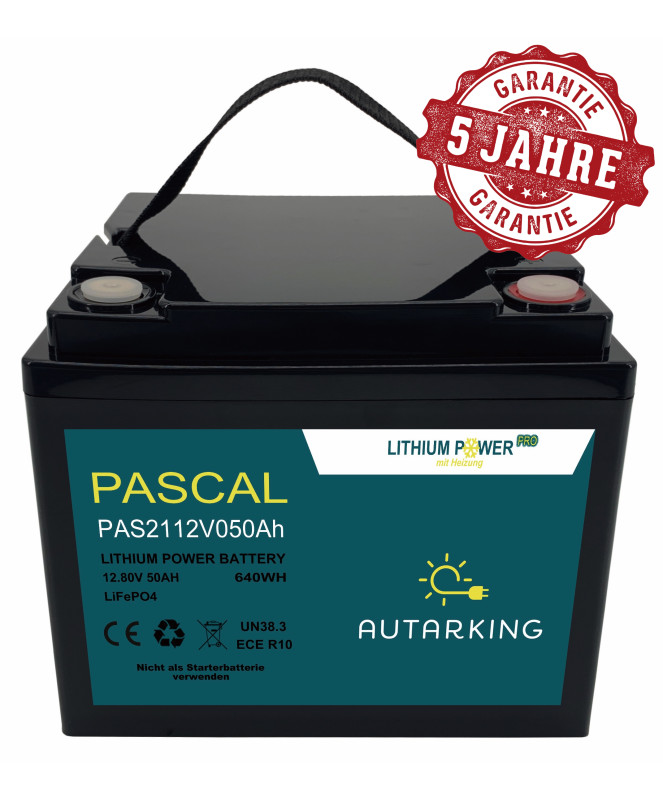

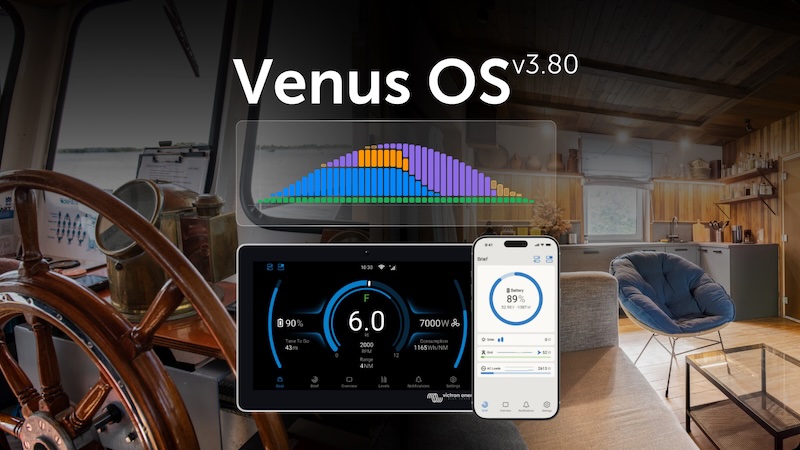
- Excess loads
- EEBus integration
- GX UI portrait mode
- GX control panel improvements
- Bluetooth range extender
- GX Bluetooth BMS readout
- EV charging station improvements

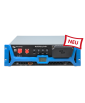

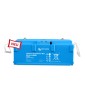
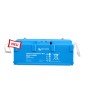
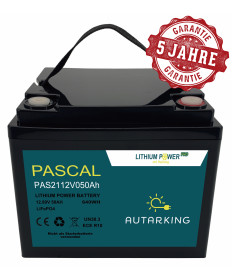
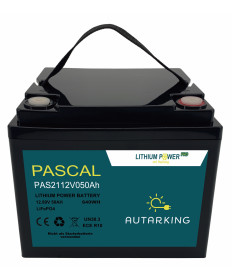
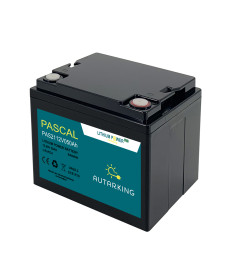
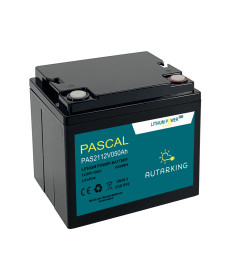
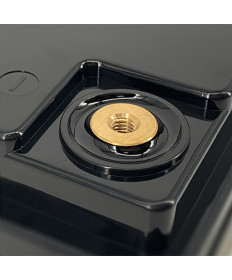

- Battery voltage 12.8V, capacity 50Ah, 6 kg
- internal BMS with Bluetooth,
- 5-amp active balancer & 15W heater
- charging current max. 50A, discharge current max. 100A / 130A (5s)

|
VRG - Lithium, 4'001 - 5'000 gr. |
The AUTARKING Pascal Lithium HEAT is a 12.8-V LiFePO4 battery with 50 Ah and 640 Wh. It is suitable as a compact power battery for mobile and stationary systems in which sensors, data loggers, communication equipment, or other 12-V devices are to be operated independently of the power grid.
With a maximum continuous discharge current of 100 A and a peak discharge current of 130 A for five seconds, it supports not only low-power, continuous-use devices but also systems with short-term spikes in current demand. Capacity, peak loads, and the desired backup time must be calculated individually for each application.
The Pascal Lithium HEAT is suitable for small off-grid systems, provided that the voltage, power requirements, inrush currents, and environmental conditions fall within the technical limits. Examples of such applications include:
For safety-critical monitoring tasks, sufficient power reserves, fault alerts, and, if necessary, a redundant power supply must be provided. The battery is not a substitute for project-specific safety or availability planning.
The built-in Bluetooth module allows you to monitor battery data using the AUTARKING app. This connection is intended for setup, diagnostics, and maintenance in close proximity to the battery.
Bluetooth is not an Internet-based remote monitoring system. Only one mobile device can be connected to the battery at a time. If the Bluetooth module is in power-saving mode, it will be reactivated within a few minutes by charging or discharging.
If the battery is to be monitored remotely via a Victron system, the measurement is taken via a a separate Victron SmartShunt or BMV battery monitor. The shunt is connected to the battery's negative terminal and measures voltage as well as the total incoming and outgoing current. Based on this data, the battery monitor calculates, among other things, the state of charge, the ampere-hours consumed, and the estimated remaining runtime.
The SmartShunt or BMV can be connected via a VE.Direct-Kabel or a suitable VE.Direct-USB-Verbindung can be connected to a GX device such as the Cerbo GX. If an Internet connection is available, the GX device transmits the measurement values to the Victron VRM Portal.
The internal battery management system monitors cell voltages, currents, and temperatures. According to the manual, it protects the battery against overvoltage, undervoltage, overcurrent, short circuits, and excessively high or low temperatures. Automatic cell balancing helps maintain a uniform state of charge across the individual cells.
The BMS is an internal protection feature. Nevertheless, the charger, wiring, fuses, and connected loads must be properly sized and operated within the specified limits.
If the battery temperature drops below 0 °C and an external charging current is applied, the BMS activates the built-in cell heater. The heater remains active until the cells reach 10 °C. Only after the cells have warmed up sufficiently are they charged under appropriate conditions.
For normal heating operation, the manual specifies a minimum external charging current of 5 A. If no charger is connected, the heater will not be powered by the battery.
The rated energy of 640 Wh serves as the basis for calculating the operating time. To do this, the power consumption and operating time of all sensors, data loggers, routers, cameras, and other devices are added together. In addition, standby power consumption, cable and conversion losses, temperature margins, and several days with low solar yield must be taken into account.
The basic formula is as follows: The expected runtime in hours is calculated by dividing the project-specific usable energy in Wh by the average system load in W. For remote measurement points, the design should also take into account inrush currents, communication intervals, and the desired bad-weather reserve.
The battery requires a charger suitable for LiFePO4 or a solar charge controller configured accordingly with a CC-CV charging method. The manual specifies a charging voltage of 14.2 to 14.6 V, a recommended charging current of no more than 25 A, and a maximum continuous charging current of 50 A.
Before using the battery for the first time, it should be fully charged so that the BMS’s state-of-charge indicator can calibrate itself. The wire gauge, fuse, and M6 connectors must be rated for the maximum current. The specified tightening torque for the connections is 10 to 15 Nm.
According to the manual, AUTARKING 12-V LiFePO4 batteries of this type can be connected in series (up to four batteries) or in parallel (up to eight batteries). Only batteries of the same type, voltage, and capacity may be connected. Before connecting them, they must be brought to the same state of charge.
In a series connection, the voltage difference between the batteries must not exceed 50 mV. For parallel connections, connecting cables of equal length and sufficient capacity are required. According to the manual, the permissible charge and discharge currents do not increase in the same proportion as the number of batteries in a parallel connection; the system design must take this limitation into account.
| Model | PAS2112V050AH |
| Battery Chemistry | Lithium iron phosphate (LiFePO4), prismatic cells |
| Rated Voltage | 12.8 V |
| Rated capacity | 50 Ah |
| Rated power | 640 Wh |
| Internal resistance | Less than 10 mΩ |
| Charging efficiency | 96% |
| Discharge efficiency | Over 99% |
| Self-discharge | Less than 3% per month |
| Cycle life | At least 3,000 cycles at 25 °C |
| Charging voltage | 14.2 to 14.6 V |
| Recommended charging current | 25 A maximum |
| Maximum continuous charging current | 50 A |
| Maximum continuous discharge current | 100 A |
| Peak discharge current | 130 A for 5 seconds |
| Discharge Cut-Off Voltage | 10 V |
| Temperature During Discharging | -20 to 65 °C |
| Temperature During Charging | -30 to 65 °C with temperature-controlled heating |
| Cell Heating | Automatically drops below 0 °C with an external charging current; shuts down at a cell temperature of 10 °C |
| Bluetooth | Integrated, local control via the AUTARKING app |
| Series Connection | Up to 4 batteries |
| Parallel Connection | Up to 8 batteries |
| Dimensions | 198 × 166 × 170 mm |
| Weight | 6 kg |
| Battery Connections | M6, tightening torque 10 to 15 Nm |
| Housing and Protection Rating | ABS, IP65 |
| Warranty | 5 years in accordance with the warranty terms and conditions |
The AUTARKING Pascal Lithium HEAT 12.8V 50Ah is a compact 640-Wh energy storage system for self-sufficient measurement, sensor, and monitoring systems. Bluetooth facilitates on-site monitoring, while the integrated heater enables operation in cold environments. For Victron remote monitoring, the battery is monitored externally via a SmartShunt or BMV and connected to the VRM Portal via a GX device.
It is suitable for small, self-sufficient measurement, sensor, telemetry, and monitoring systems, such as weather stations, geomonitoring, traffic monitoring, or natural hazard monitoring. Proper energy and power sizing is required.
No. Bluetooth is used for local control within the battery's range. Additional measurement and communication devices are required for internet-based remote monitoring.
The battery is monitored using a separate Victron SmartShunt or BMV battery monitor. This is connected via VE.Direct connected to a GX device such as the Cerbo GX. The GX device transmits the measurement values to the VRM Portal when an Internet connection is available.
No. SmartShunt and BMV measure voltage and total current outside the battery and use these readings to calculate, among other things, the state of charge. The Pascal battery’s internal Bluetooth display and the external Victron measurement are two separate monitoring channels.
When the battery temperature is below 0 °C and an external charging current is applied, the BMS activates the cell heater. According to the manual, a minimum external charging current of 5 A is required for normal heating operation. The heater stops when the cell temperature reaches 10 °C.
This depends on the average power consumption and the losses of the entire system. Power consumers, operating times, communication, conversion losses, temperature margin, and the desired number of bad-weather days the system must be able to bridge must all be calculated together. The battery provides a nominal capacity of 640 Wh.

- Battery voltage 12.8V, capacity 50Ah, 6 kg
- internal BMS with Bluetooth,
- 5-amp active balancer & 15W heater
- charging current max. 50A, discharge current max. 100A / 130A (5s)